Let’s face it—manual data entry is a soul-crusher. Nobody enjoys jumping between software systems, copying and pasting the same numbers. It’s tedious, it’s time-consuming, and most importantly, it’s error-prone. That’s why businesses everywhere are embracing the rising tide of automation and ERP integration—and frankly, it’s about time. These two game-changing tools are teaming up to make life easier, workflows smoother, and businesses smarter. Let’s explore how and why this tech duo is quickly becoming the favorite power couple in the business world.
Why Automation Is No Longer Optional
Picture this: your team is buried under spreadsheets, updating inventory records while also trying to manage customer orders manually. It’s chaotic, right? That’s where automation steps in like a calm, organized hero. Automation is basically the ability to make your systems work on their own without human involvement. Whether it’s sending out invoices, updating payroll, or tracking shipments, automation takes the load off your shoulders.
The best part? It doesn’t just save time—it also cuts down on human error. Fewer typos mean fewer headaches, which means more time for the important stuff. No more chasing missing numbers or dealing with duplicate entries. Instead, you get a streamlined workflow that feels like it runs itself.
Enter ERP: The Brain of Your Business
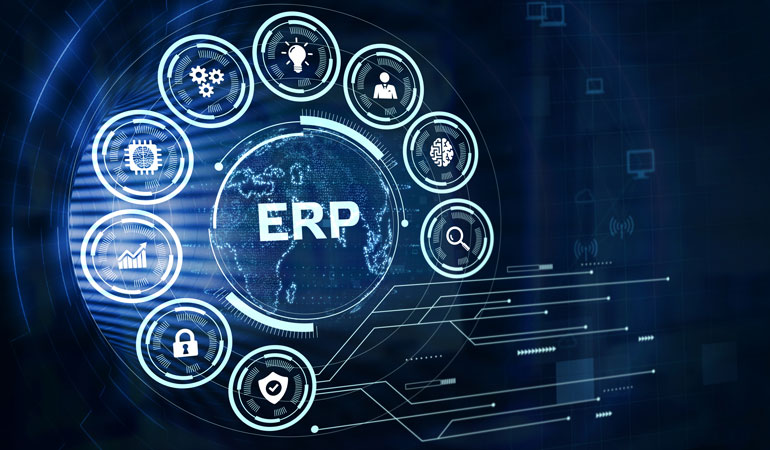
ERP, short for Enterprise Resource Planning, might sound a little techy, but it’s really just a super-smart system that connects all your business functions. Think of it as a central nervous system that keeps everything—from HR to inventory to finance—working in harmony. When you integrate automation with ERP, you get a business that practically runs itself (with a little human oversight, of course).
With ERP, you don’t need ten different tools to manage your departments. Everything lives in one place. Automating those ERP functions means tasks get done faster, and nothing falls through the cracks. Need to know when you’re running low on stock? ERP will alert you. Want to automatically reorder supplies? Automation’s got it covered.
The Magic of Integration: Better Together
Automation and ERP, on their own, are impressive. But when you integrate them together, they unlock a whole new level of productivity. Integration means your systems can talk to each other. It’s like teaching your software to have conversations so they can solve problems while you sip your coffee.
For example, when a customer places an order online, your integrated ERP system can automatically update inventory, notify the warehouse, send an invoice, and adjust your financial records—all without anyone lifting a finger. That’s the kind of seamless process that saves hours of manual work and keeps customers happy.
Integration also means your data is always up to date. No more wondering if you’re looking at the latest numbers. Real-time updates across all departments help you make better decisions, faster. It’s business intelligence without the drama.
It’s Not Just for Big Companies Anymore
A few years ago, automation and ERP systems were mostly for the big players—those corporate giants with huge IT budgets. But that’s changed in a big way. Thanks to cloud technology and scalable solutions, even small and mid-sized businesses can now afford these tools. That means the benefits of automation and ERP integration are no longer out of reach for the little guys.
Small businesses can use these tools to compete on a much larger playing field. With better insights, faster operations, and happier customers, they can scale up confidently. And the best part? Many modern ERP tools are user-friendly and don’t require a tech wizard to set up or manage.
Smarter Roads Ahead: How AI is Catching Fraudsters Using E-Way Data
In today’s digital world, where almost everything is just a click away, fraud has become sneakier than ever. But guess what? Artificial Intelligence (AI) is stepping up like a digital Sherlock Holmes—especially in the world of logistics and transportation. One of its latest tools? E-way bills! Yes, those digital documents used to track goods moving across India are becoming treasure maps for fraud detection. Let’s explore how AI is turning e-way data into a superhero cape for businesses and tax departments alike.
What’s the Deal with E-Way Bills Anyway?
If you’ve ever wondered how governments keep track of goods moving from one state to another, meet the e-way bill. It’s an electronic document generated on the GST portal that contains details like invoice numbers, transporter info, and delivery routes. Basically, if something’s being transported and it’s worth more than ₹50,000, it needs an e-way bill to hit the road.
Now, this might sound pretty routine, but hidden in this sea of transport data are some big red flags. Fake invoices, under-reported values, or even ghost deliveries—there’s a lot that can go wrong. That’s where AI comes into the picture, waving its magic wand.
AI: The Digital Detective That Never Sleeps
AI is like that super-smart friend who notices everything you miss. While a human might take days to go through thousands of bills, AI can scan them in seconds. Using advanced algorithms, machine learning, and pattern recognition, AI can catch suspicious activities faster than you can say “fraud.”
Let’s say a business creates multiple e-way bills for the same invoice number or constantly ships high-value goods but pays surprisingly low taxes. AI notices this weird behavior and sends a virtual eyebrow raise to the system. It’s constantly learning from new data, improving its ability to spot shady activity, and keeping everyone honest.
Real-Time Alerts: Because Timing Is Everything
The coolest part about using AI with e-way data is that it works in real-time. That means authorities don’t have to wait weeks to notice something fishy. The system can ping them the moment it senses a mismatch, like a ghost transporter who doesn’t even own a truck or a business shipping goods to fake addresses.
With real-time fraud detection, tax authorities can take quicker action, businesses can avoid getting tangled in fraud networks, and honest traders can breathe easy knowing that AI is on their side.
AI Doesn’t Just Detect, It Predicts Too
One of the most powerful features of AI is predictive analysis. That means it doesn’t just catch fraud as it happens—it can actually forecast where it’s most likely to happen next. By analyzing past fraud cases, unusual transaction patterns, and transport trends, AI builds a smart model that flags high-risk activities before any damage is done.
Imagine having a crystal ball that warns you which transactions to double-check—pretty awesome, right? This helps businesses tighten internal controls, while governments reduce revenue loss without increasing manual inspections.
A Win-Win for Everyone (Except Fraudsters)
Using AI to analyze e-way bill data isn’t just about catching bad guys. It also makes life easier for businesses that play by the rules. Fewer unnecessary audits, faster clearance times, and increased trust between companies and regulators are just some of the benefits.
Plus, when fraud is reduced, the economy gets a boost. More tax revenue means better public services, stronger infrastructure, and more support for small businesses. Basically, AI is helping build a cleaner, fairer, and smarter logistics ecosystem—one e-way bill at a time.
Linking E-Way Bills With e-Invoicing: What You Need To Know (Without Dozing Off!)
Let’s face it—tax talk doesn’t usually excite anyone (unless you’re a caffeine-powered accountant). But sometimes, there’s a piece of news in the GST world that actually makes things smoother. That’s where the linking of E-Way Bills with e-Invoicing comes in. Sounds a bit like alphabet soup, right? Don’t worry. We’ll break it down, keep it simple, and maybe even sneak in a smile or two.
What’s the Buzz About E-Way Bills and e-Invoicing?
Before we dive into the linking part, let’s quickly understand what these two creatures are. Think of an E-Way Bill as a digital permission slip for transporting goods worth over ₹50,000. It helps track goods moving from one place to another, especially between states. Now, e-Invoicing is the system where B2B invoices are uploaded on a portal and authenticated by the government.
So why do they need to be linked? Well, earlier, you’d have to generate an invoice and then separately fill in the details again for the E-Way Bill. It was like writing the same homework twice. Not very efficient, right? That’s where integration saves the day.
One Link to Rule Them All: Why the Integration Matters
The linking of e-Invoicing and E-Way Bills isn’t just a tech upgrade—it’s a full-blown simplification party. Once you create an e-invoice, the system can automatically populate Part-A of the E-Way Bill. You don’t have to retype every single field like invoice number, GSTIN, value, and item details. The only thing you need to manually enter is the vehicle number in Part-B, and you’re good to go!
This means less time spent on data entry, fewer chances of errors, and no more grumbling about mismatched details during transport inspections. It’s almost like having a smart assistant that fills out the boring parts of the form for you. Now who wouldn’t want that?
Who Needs to Worry (and Who Can Chill)?
Right now, the integration is mandatory for businesses with an aggregate turnover above ₹5 crore in any financial year. So if you’re running a mid to large-sized business, it’s time to cozy up to this new system. If your business turnover is below ₹5 crore, you can breathe easy (for now), but it’s always good to stay in the loop.
Also, remember—this linking is only applicable to B2B transactions and export invoices, not for retail (B2C) sales. So your neighborhood grocery shop doesn’t have to worry about it just yet.
How Does It Actually Work? (Without the Jargon)
Here’s how it goes in plain speak: You create your invoice as usual in your ERP software or billing tool. That invoice is then uploaded to the Invoice Registration Portal (IRP), where it gets a special number called Invoice Reference Number (IRN) and a fancy QR code.
Now, because your invoice data is already with the portal, it can directly use those details to create the E-Way Bill. The system fetches all the juicy bits like consignee info, product description, quantity, and value—all without you lifting a finger. All you need is to enter the transport details like the truck number, and voila—your E-Way Bill is ready!
It’s like ordering a pizza and having your address auto-filled every time. Less effort, faster results.
Benefits That Actually Make You Smile
Let’s not pretend this is just a backend change that no one notices. Linking E-Way Bills with e-Invoicing actually has some solid perks:
- Time saver: Cut down on double data entry.
- Fewer errors: Auto-filled details mean fewer typos and mistakes.
- Better compliance: Your documents match perfectly—no last-minute fixes during audits.
- Smooth logistics: With faster E-Way Bill generation, goods get moving quicker, and transporters spend less time waiting.
It’s like GST compliance got a mini-upgrade that finally makes sense.
Anticipated Changes in Distance Validity Norms: What You Need to Know
The way we measure distance validity is evolving—and fast. Whether it’s for travel, education, or work, old rules are getting a refresh.
Gone are the days of rigid “one-size-fits-all” policies. Governments and organizations are rethinking how far is “far enough” in a digital, post-pandemic world.
Why does this matter? Because these changes could affect your daily commute, online classes, or even remote work approvals. Let’s dive in!
1. Why Are Distance Validity Norms Shifting?
The world isn’t the same as it was five years ago. Remote work boomed. Online education became mainstream. Travel habits transformed.
Strict distance rules no longer make sense when someone can work from Bali as efficiently as from Boston. Governments and institutions are catching up.
For example, some universities now accept online degrees as valid, regardless of location. Companies are ditching “office-only” policies for hybrid models.
Even public transport systems are adjusting fare zones to match modern commuting patterns. Change is everywhere—and it’s long overdue.
2. Key Areas Where Norms Are Changing
Distance validity rules impact more than you might think. Here’s where the biggest shifts are happening:
Work & Remote Employment
Before: “Work from home” was a rare perk. Now? Many jobs don’t care where you log in from, as long as work gets done.
Some companies even hire globally, ignoring traditional “local employee” rules. Others offer “work from anywhere” months—no distance limits attached.
Education & Online Learning
Before: Degrees had to be earned in-person. Now? Accredited online programs hold the same weight in many fields.
Some countries are even relaxing residency requirements for international students. If you attend virtually, does distance still matter?
Transport & Urban Planning
Before: Fixed fare zones based on strict distance limits. Now? Cities are testing dynamic pricing based on demand, not just miles.
Some public transit systems are even introducing unlimited travel passes—because why restrict commutes when flexibility boosts productivity?
3. What These Changes Mean for You
Wondering how this affects your life? Here’s the breakdown:
- Fewer Location Barriers – Want to work for a company abroad? Now you can, without relocating.
- More Flexible Education – Study at top universities without moving countries. Online degrees are gaining respect.
- Smarter Commuting – Fare systems adapting to real-world travel patterns mean fairer pricing for you.
The bottom line? Distance is becoming less of a roadblock. Whether for jobs, school, or travel, flexibility is the new normal.
4. Challenges & What’s Still Up for Debate
Not everyone’s on board with these changes. Some argue:
- Tax & Legal Issues – If employees work from anywhere, which country’s labor laws apply?
- Quality Control in Education – Can online learning truly match in-person experiences?
- Infrastructure Strain – Will cities cope if commuter patterns become unpredictable?
These debates will shape future policies. But one thing’s clear—distance norms won’t go back to how they were.
5. How to Stay Ahead of the Curve
Want to make the most of these shifts? Here’s how:
For Professionals – Negotiate remote work flexibility. Many employers are open to it now.
For Students – Explore accredited online programs—they might save you time and money.
For Commuters – Watch for new transport policies that could make your travel cheaper.
Change can be confusing, but it also brings opportunities. The key is to stay informed and adapt.
Final Thoughts: Distance Is No Longer a Limit
The way we define “valid” distances is transforming. What once seemed set in stone is now up for discussion—and that’s exciting.
Whether it’s work, education, or travel, the future is flexible. The sooner we embrace it, the more we’ll benefit.
So, keep an eye on these changes. Your dream job, degree, or commute might be closer (or farther) than you think—and that’s okay!
What’s your take? Are you ready for a world where distance matters less? Let us know in the comments!