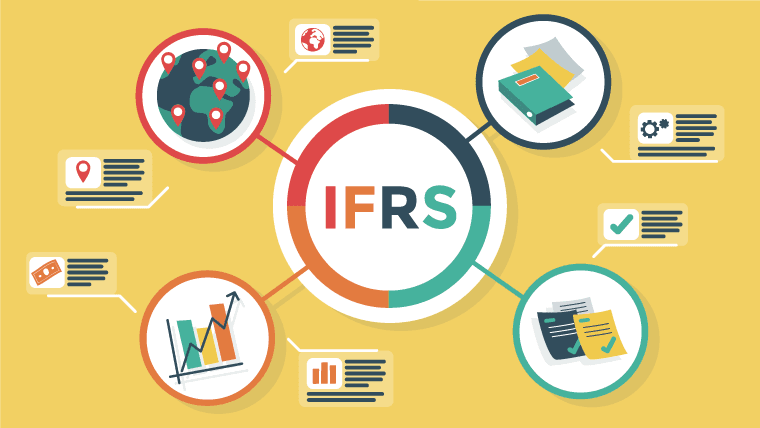
Let’s be honest—when you hear the term IFRS, you probably imagine a complicated rulebook with pages full of accounting jargon. But what if I told you that IFRS is just like a universal language for finance, and it actually makes life easier for everyone—from students to CEOs?
Whether you’re a budding accountant, a commerce student, or someone who simply wants to understand how global businesses work, IFRS (International Financial Reporting Standards) is something you should care about. Not because it sounds fancy, but because it decides how companies around the world tell their financial stories.
Let me take you through it in the most fun, simple, and zero-stress way possible. Ready? Grab a cup of chai or coffee and let’s dive into this.
IFRS: A Passport for Global Accounting
Imagine you’re traveling to different countries. You wouldn’t want to keep changing your language, currency, and customs every hour, right? Well, businesses feel the same way. When companies operate in multiple countries, they want a common accounting language so that investors, regulators, and even customers can understand their financial reports easily.
That’s where IFRS comes in. It’s a set of globally accepted rules and guidelines that tells companies how to prepare and present their financial statements. Whether a company is based in Germany, India, or Australia, IFRS helps make their reports understandable and comparable.
In simple words, IFRS removes the confusion. It’s like switching from dozens of different currencies to just one solid method that everyone understands. No magic. Just smart, consistent financial communication.
Why You (Yes, You!) Should Actually Care
Now you might be thinking, “Okay cool, but I’m not a CFO or investor—so why should I care?” Great question!
If you’re a commerce or CA student, IFRS knowledge gives you a global edge. In interviews or exams, when you say you understand IFRS, you’re basically saying, “I can talk finance anywhere in the world.” And trust me, employers love that.
If you’re planning to work in finance, auditing, consulting, or international business, knowing IFRS can open doors—both job-wise and knowledge-wise. It’s like learning Google Sheets today—it’s not optional, it’s essential.
Even if you’re just reading the financial reports of your favorite company, having basic IFRS knowledge helps you know what’s real and what’s just creative reporting. That’s powerful stuff.
And hey—if you’re a freelancer or running your own small business, understanding IFRS helps you keep things professional and future-ready. You don’t want to look clueless when your first foreign client sends you an invoice with terms like “fair value” and “lease liability,” right?
The Big Picture: Trust, Transparency, and Truth
Let’s face it, the business world has had more drama than daily soaps—frauds, misleading profits, overvalued assets—you name it. That’s why standards like IFRS exist: to bring clarity and prevent companies from telling half-truths.
Under IFRS, companies must disclose everything in a standard, transparent, and logical way. So no matter where you’re sitting—Tokyo, Toronto, or Tamil Nadu—you’ll be able to read a company’s financial report and actually understand what’s going on.
This makes investing safer, fraud detection faster, and global trust stronger. IFRS doesn’t just serve accountants—it helps governments, banks, businesses, and even regular people like you and me. It builds financial harmony in a noisy, chaotic world.
And if you’ve ever wondered how multinationals manage to speak the same financial language across 30 countries—yep, that’s IFRS doing the heavy lifting behind the scenes.
Okay, But Is It Really That Complicated?
Here’s the good news: you don’t need to memorize all the IFRS rules to be smart about it. You just need to understand the basics. Think of IFRS like learning how to ride a bicycle. At first, it feels wobbly. But once you know the balance and direction, it becomes second nature.
Most of the important concepts—like revenue recognition, leases, assets, and liabilities—are actually based on common sense. You just need to know when and how to apply them.
There are over 15 major IFRS standards, but only a handful are used daily in business decisions. And the best part? Once you know the logic behind one or two, the others start making sense too.
You can even start learning through case studies, YouTube explainers, or fun examples like buying pizza subscriptions or renting office chairs—real-life stuff.
Top 5 IFRS Standards You Must Know (Explained in Simple Words!)
Accounting might sound like a lot of numbers and stress, but trust me, it gets way easier once you crack the IFRS code. IFRS, or International Financial Reporting Standards, are like global traffic rules for businesses – they make sure companies around the world report their finances in a clear, honest, and comparable way.
Now, if you’ve ever looked at a financial statement and felt like it’s written in another language, you’re not alone. That’s why I’m here to walk you through the Top 5 IFRS Standards that you should definitely know—whether you’re a student, a job-hunter, or just someone trying to make peace with accounting. Let’s make this fun, bite-sized, and jargon-free. Pinky promise.
1. IFRS 15 – Revenue from Contracts with Customers
Let’s start with everyone’s favorite topic – money coming in.
IFRS 15 tells companies when and how to record revenue, making sure they don’t get too excited too early. You know when you buy a gym membership for a whole year, but never actually go? Well, the gym can’t recognize all that money as “earned” right away. According to IFRS 15, revenue must be recognized when the service is delivered – not when the money just shows up.
This standard introduces a 5-step model (don’t worry, it’s not scary) to identify the contract, define obligations, determine price, allocate it, and finally recognize revenue. It’s like baking a cake – you follow steps in order, or you end up with a mess. So, IFRS 15 keeps the cake – or your revenue – neat and fair.
2. IFRS 16 – Leases
Ever wondered how companies handle those giant office spaces, swanky equipment, or even airplanes they don’t own? That’s where IFRS 16 comes into play.
Before IFRS 16, companies could hide lease costs off the balance sheet. But thanks to this standard, everything comes into the light – literally. Now, most leases must be shown as “right-of-use” assets and lease liabilities, making financial statements more transparent.
So, whether it’s a coffee machine or a commercial property, if it’s leased, it’s listed. For you, this means a company’s balance sheet tells the full story—not just the glamorous parts. And yes, no more lease hide-and-seek.
3. IFRS 9 – Financial Instruments
Don’t let the name scare you – IFRS 9 just wants you to know how to treat things like loans, shares, and investments properly.
This standard mainly covers how to classify, measure, and handle changes in value for financial instruments. It also introduced something called the “expected credit loss” model. This means companies now have to predict whether someone might not pay them back – and show it in their books early on.
Think of it as financial future-telling. IFRS 9 wants you to be cautious and realistic, not overly hopeful, about your money matters.
4. IFRS 13 – Fair Value Measurement
Imagine trying to sell an old phone and deciding what it’s worth. That’s exactly the kind of logic IFRS 13 wants companies to use.
This standard helps businesses figure out how to measure “fair value” – that is, what something would reasonably sell for in an open market. It doesn’t care what you paid for it five years ago; it cares what it’s worth now.
IFRS 13 also sets a clear hierarchy—Level 1 to Level 3—based on how available and reliable the market data is. In short, this standard keeps companies honest by stopping them from making up prices that sound better than they are.
5. IFRS 3 – Business Combinations
Ever seen one company buy another and wondered how they decide the price or merge their books? Enter IFRS 3.
This standard applies when one company acquires control of another. IFRS 3 ensures everything—like goodwill, assets, liabilities, and ownership—is recorded correctly. It’s like organizing two kitchens after a couple moves in together. You need to know what to keep, what’s valuable, and what goes straight to the trash.
IFRS 3 also introduces the concept of purchase method accounting, where everything is recorded at fair value on the acquisition date. So, no cheating, no hiding, and definitely no overestimating that broken microwave (or asset).
Common Myths About IFRS Debunked
Let’s clear the fog and laugh a little while we’re at it!
Myth 1: “IFRS is only for big multinational companies.”
Nope! This is like saying only chefs should know how to cook. IFRS, or International Financial Reporting Standards, is not limited to corporate giants. Even small and medium-sized businesses can benefit from adopting IFRS, especially if they plan to grow or attract international investors. You don’t need to be listed on a stock exchange to use globally accepted financial practices. In fact, IFRS helps make your financials clearer and more attractive to future opportunities. So yes, even your neighbourhood bakery or startup dream can use IFRS.
Many people think IFRS is just a fancy suit worn by financial giants. But it’s actually like a well-fitting blazer—helpful for anyone aiming to look good in front of investors. If you’re planning to go global, get funding, or just want your books to look smart and understandable, IFRS is your buddy.
Myth 2: “IFRS is too complicated to understand.”
This one is a classic. Sure, IFRS has its technical bits (don’t we all?), but it’s not rocket science. You don’t need a PhD in accounting to get the hang of it. In fact, IFRS aims to simplify financial reporting by making it more logical and principle-based. Unlike some traditional accounting standards that give long checklists, IFRS wants you to use your judgment and explain things clearly.
Let’s be honest—every subject looks scary at first glance, even riding a bicycle did! But with proper learning and good guidance, IFRS becomes manageable. The key is to break it into bite-sized pieces. And trust me, if you can binge-watch 8 episodes of a show in one night, you’ve got the stamina to understand IFRS.
Also, many training materials, workshops, and even Instagram reels now explain IFRS in a super digestible format. So if you’re serious about your business or career in finance, don’t let fear of complexity hold you back. You’ve handled way worse—like doing taxes during exam season!
Myth 3: “IFRS and GAAP are basically the same thing.”
Not quite! Saying IFRS and GAAP are the same is like calling cricket and baseball the same sport. They both involve financial reporting, yes, but they follow different rules and principles. IFRS is more principle-based, while U.S. GAAP is more rule-based. This means IFRS gives more freedom and responsibility to explain your numbers logically.
For example, when it comes to revenue recognition or lease accounting, the approach under IFRS might differ significantly from GAAP. If you’re working in the U.S., you’ll likely use GAAP. But if your company has a global reach, IFRS might be the preferred language of reporting. Understanding the differences can save you from big blunders in cross-border transactions or job interviews.
So no, they aren’t twins—they’re more like cousins from different accounting families. Both are cool in their own ways, but don’t mix them up unless you want to confuse your balance sheet (and your boss).
Myth 4: “Switching to IFRS is a waste of time and money.”
Imagine someone saying using GPS is a waste of time because they know the old route. That’s what this myth sounds like. Yes, switching to IFRS may involve a bit of effort—training, adapting software, and updating reports—but the long-term benefits often outweigh the short-term hassle.
Once you’re on IFRS, your financial statements become easier for global investors, lenders, and even employees to understand. You attract more credibility, more funding opportunities, and fewer “Wait, what is this number?” questions during board meetings.
Plus, in today’s world, change is the only constant. Embracing IFRS early can keep you one step ahead, while others are still figuring things out. It’s an investment in clarity, professionalism, and future-proofing your business.
Myth 5: “IFRS is only relevant for accountants.”
If you think IFRS is only for accountants, you’re missing half the story. It’s like thinking only drivers should know traffic rules. IFRS affects business owners, investors, analysts, finance students, and even policymakers. Anyone involved in decision-making around money should understand how financial statements are structured.
When you read a company’s annual report or decide where to invest your money, IFRS gives you the tools to interpret numbers correctly. It helps you avoid being misled by creative accounting or half-truths hidden in notes. So even if you’re not preparing the statements, knowing how to read them is powerful.
In short, IFRS isn’t a private club for accountants—it’s a toolkit for anyone dealing with money, growth, or business strategy.
Fun Ways to Memorize IFRS Guidelines
Because studying financial standards doesn’t have to be boring!
1. Turn IFRS Into Catchy Mnemonics
Let’s be honest—memorizing a bunch of accounting standards can make your head spin. But you know what helps? Mnemonics! Those silly little phrases you made in school to remember tough concepts still work wonders here. Imagine remembering “IFRS 15 – Revenue from Contracts with Customers” as “Rita Can’t Cook Curry.” Each word stands for a step: Identify, Contract, Cost, Control, and Completion.
The weirder the phrase, the better it sticks in your mind. So, make your own wild sentences—trust me, they work better than rereading your notes a hundred times. Plus, you’ll laugh every time you recall them. Laughter = memory boost!
2. Make Flashcards, but With a Twist
Flashcards are boring? Not if you spice them up! Instead of plain cards with IFRS numbers and names, add colors, doodles, or memes. Draw a tiny pizza next to IFRS 16 to help you remember “Leases.” Why a pizza? Because leased assets are like pizzas—you borrow them, enjoy them, and pay over time!
You can even play a flashcard game with friends or fellow commerce nerds. Set a timer and see who answers the most within a minute. Add a small prize—like a free coffee—and suddenly, IFRS becomes competitive fun.
Bonus tip: Use digital apps like Anki or Quizlet. You can study on the go and track your progress with ease!
3. Use Songs and Rhymes (Yes, Seriously)
If you’ve ever memorized a Bollywood song lyric without trying, this tip is for you. Set the IFRS steps or definitions to a familiar tune. For example, sing the 5 steps of IFRS 15 to the tune of “Twinkle Twinkle Little Star.” It may feel weird at first, but you’ll find yourself humming accounting rules in the shower.
Make up your own songs or search online—some genius CA aspirants and commerce students have already uploaded rhymes that’ll make you smile and learn faster. Singing while studying? Now that’s multitasking!
4. Teach a Friend or a Stuffed Toy
Teaching someone is a proven memory booster. Grab a study buddy, or if no one’s around, your teddy bear will do just fine. Try explaining what IFRS 9 (Financial Instruments) is about in simple words. If you can teach it clearly, you know it well. If your “student” looks confused (even if it’s a stuffed panda), revisit the topic.
You can even record yourself explaining a concept and listen to it later, like a podcast. Your own voice explaining things is surprisingly powerful for memory recall. Bonus: it’ll help during oral exams or interviews!
5. Visualize Like a Movie Scene
Picture this: You walk into a room where IFRS 13 is throwing a fair value party, and assets are dancing based on market price. Sounds funny? Exactly. That’s how visualization works. Imagine IFRS standards as characters or movie scenes. Your brain loves visuals, especially dramatic or weird ones.
Create a mental movie where one IFRS standard solves a mystery, while another hosts a cooking show using accounting ingredients. The sillier and more vivid the scene, the better you’ll remember it.
6. Use Sticky Notes on the Wall (or Mirror!)
Place colorful sticky notes on your wall, mirror, or desk with IFRS names and keywords. Seeing them daily makes them stick naturally in your mind. Change the location or color every few days to refresh your brain’s memory triggers. You can even make a ‘Standard of the Day’ wall and focus on just one guideline per day.
Bonus tip: If you love taking mirror selfies, let the notes sneak into the background. Learning + aesthetic = win-win!
7. Quiz Yourself With a Timer
Want a game show experience? Set a timer for 5 minutes and quiz yourself. Try to write down everything you remember about IFRS 10, for example. Then check and correct. Compete with yourself daily and track your improvement. It’s a race—but against your own memory!
The thrill of beating your previous score makes you look forward to the next quiz session. You’ll never look at “financial reporting” the same way again.
8. Follow Fun Accounts and Memes on Social Media
Social media can help you study, if you follow the right pages. Look for Instagram or LinkedIn pages that post IFRS memes, short explainers, or accounting jokes. Laughing while learning is seriously effective—and you stay connected with updates too!
You can even create your own content. Imagine posting an IFRS reel that goes viral! You learn, and you help others learn too. That’s called productive scrolling.
Final Thoughts
Memorizing IFRS doesn’t mean torturing yourself with endless pages of text. With a little creativity, humor, and some good old fun, you can actually enjoy the process. Mix and match the methods that suit your style, and you’ll soon be quoting IFRS standards like a pro—without the yawns!
So, the next time you feel sleepy looking at IFRS 2, remember: it’s not boring—it just needs a dance move or a doodle. You’ve got this!